Next Steps
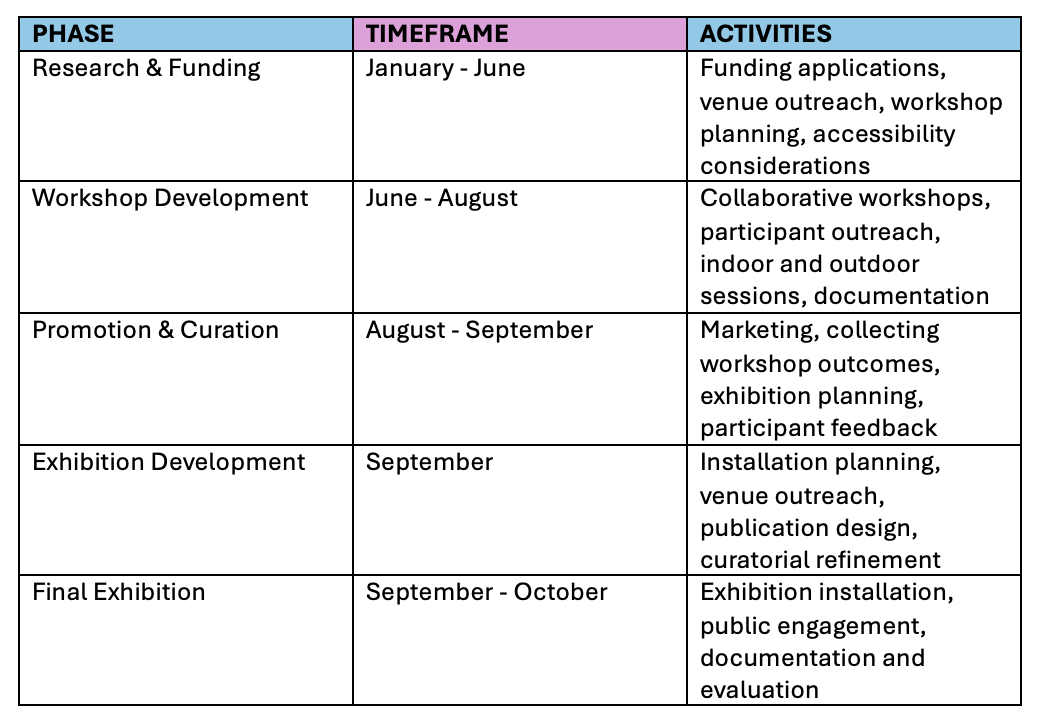
The next stage of the project will focus on bringing the collaborative workshop programme and exhibition into fruition through funding applications, venue outreach, workshop development, participant engagement, and curatorial planning. As the project is centred around socially engaged and participant-led practice, flexibility will remain important throughout all stages of development in order to respond to accessibility needs, funding opportunities, participant availability, and suitable spaces.
An important early stage of development will involve securing funding and identifying appropriate workshop venues. Possible funding bodies include Protect Scouse Dolls, a local charity supporting the trans+ community in Liverpool and Homotopia, another queer charity that supports many art-based projects that serve the queer community. As for the workshops, possible locations currently being considered include DoES Liverpool, a collaborative working and community-focused creative space with rooms suitable for non-profit workshops, and Lovelocks Coffee Shop, a queer-friendly café and community space that regularly hosts workshops, discussions, and creative events. The use of informal and community-oriented spaces is significant to the ethos of the project, helping to create workshop environments that feel accessible and welcoming.
Following funding and venue confirmation, the workshop programme itself will be finalised. This includes determining the number of participants per session, refining workshop structures, organising materials and accessibility needs, and confirming facilitators for each activity. The workshops are intended to operate through collaborative facilitation, ideally involving two facilitators per session in order to support participants effectively provide a wider range of creative knowledge and technical support. Planned facilitators would include artists and practitioners with experience in areas such as writing, zine-making, sound, socially engaged practice, and collaborative workshop delivery.
The late spring to summer months are currently being considered as the ideal period for workshop delivery, as this would allow greater flexibility for both indoor and outdoor sessions depending on weather, venue access, and participant preference. The use of the outdoors like Sefton Park for certain workshops such as the sound and spoken word may help to create more informal and relaxed environments for collaboration, which is particularly important given the emotionally sensitive themes being explored. However, the workshop timeline remains adaptable depending on funding, availability and participant accessibility.
As well as workshop development, the project will also focus on audience outreach and promotion. This would include marketing the workshops themselves as well as wider exhibition promotion through the likes of social media, posters, community networking events, word of mouth, and designated funding bodies. Continued networking within local queer and trans communities will be imperative in ensuring that the project remains participant-led and community-focused throughout.
Following on from the workshop phase, the project will move towards curatorial planning and exhibition organisation. Workshop outcomes will begin informing the conceptual and visual direction of display within the final exhibition outcome, alongside responses to an art open call of independently submitted works responding to themes of transition, bodily autonomy, fertility, and care. The exhibition itself is intended to behave as a display of artworks from the local and wider trans+ community, as well as a collaborative archive of discussion, making, documentation, and shared experience.
Potential exhibition outcomes may include:
- Participant-produced zines
- Collaborative writings
- Workshop documentation
- Sound works
- Publications
- Installation elements
- A curated section of art not produced during the workshop programme
Alongside this, accessibility and participant wellbeing will remain central considerations throughout the entirety of the project. Planned accessibility measures currently include:
- Optional anonymity
- Multiple methods of participation
- Written transcripts and printed materials
- Quiet reflective spaces and activities
- Flexible structure within the workshop and exhibition spaces allowing the community to engage at their own pace or desire
The long-term development of the project may also extend beyond the proposed exhibition outcome. The under-discussed topic of exploration is not limited to the confines of Liverpool and the wider Merseyside area which leads to the potential of touring exhibitions, digital archives, further collaboration or workshops, and the building of community support networks.