Project Evidence
The development of this project has focused on collaborative research methods, socially engaged practice, workshop planning, and community-based approaches to discussing trans identity and fertility. The project explores how creative workshops and collective discussion can function as methods of research, reflection, and exhibition development. The project is grounded in the belief that conversations surrounding trans fertility are often fragmented, isolated, or avoided entirely, despite many individuals sharing similar experiences, anxieties, and questions surrounding bodily autonomy, parenthood, medical systems, and reproductive futures.
Research undertaken throughout the project identified a lack of spaces where trans+ individuals can openly discuss relationships and experiences surrounding fertility outside of heavily medicalised institutional contexts. Much of the existing discourse surrounding fertility preservation and Hormone replacement Therapy is framed through clinical procedure, medical necessity, or political debate. In contrast, this project aims to prioritise lived experience, emotional reflection, and collective dialogue through creative and participant-led methods.
Workshop planning has therefore become a central component of the project’s development. Current workshop proposals are designed to encourage open-ended exploration rather than fixed outcomes, allowing participants to engage with the themes of fertility, transition, care, and embodiment in ways that feel personally appropriate and emotionally safe. Workshops are intended to function as supportive creative environments where discussion, making, writing, and experimentation can occur simultaneously.
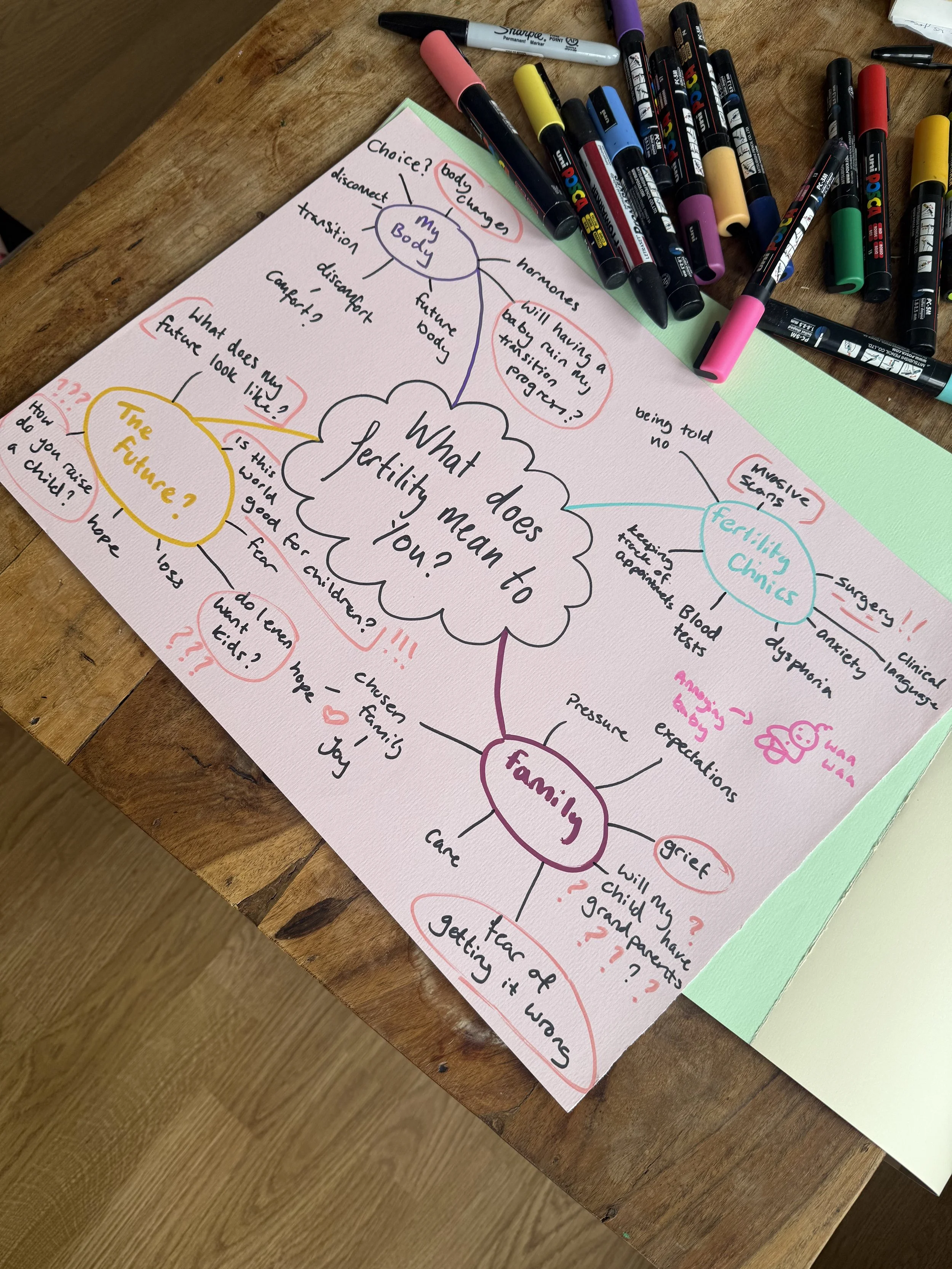
Several workshop formats have been proposed and trailed through early practice and experimentation. The first workshop would involve a starter session to help attendees get into the idea of working collaboratively and discuss the themes. This activity would involve collaborative mind-mapping exercises in which participants visually map associations, emotions, fears, expectations, and experiences connected to fertility and identity. These sessions encourage participants to identify recurring themes collectively while also allowing space for individual reflection.
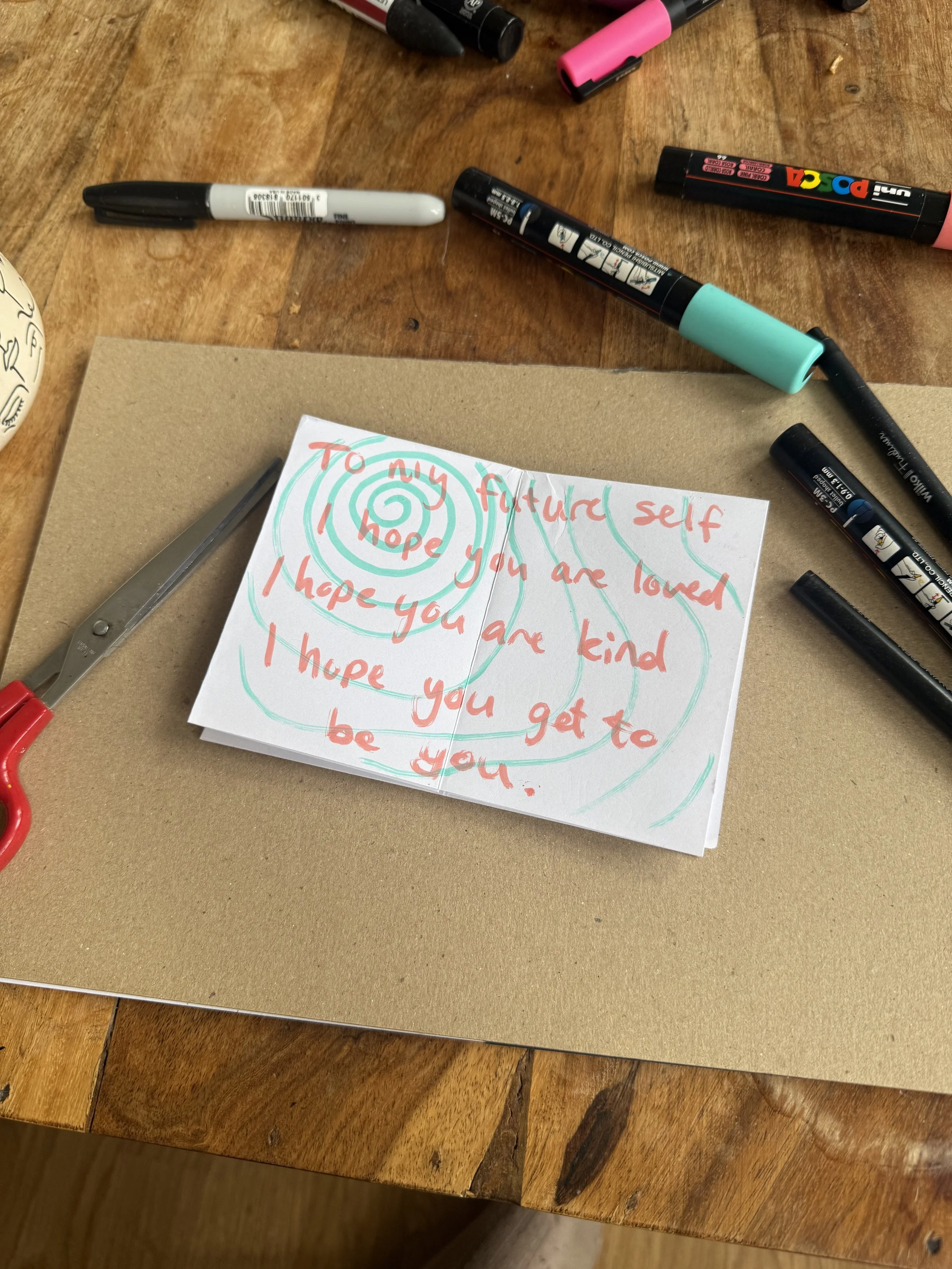
Another proposed workshop activity focuses on zine-making and self-publishing practices. Participants are encouraged to create small-scale publications combining writing, collage, drawing, found imagery, and personal reflection. The use of zine culture within the project is significant due to its historical relationship with queer and trans+ communities as a method of self-representation, knowledge sharing, and community building outside of institutional structures.
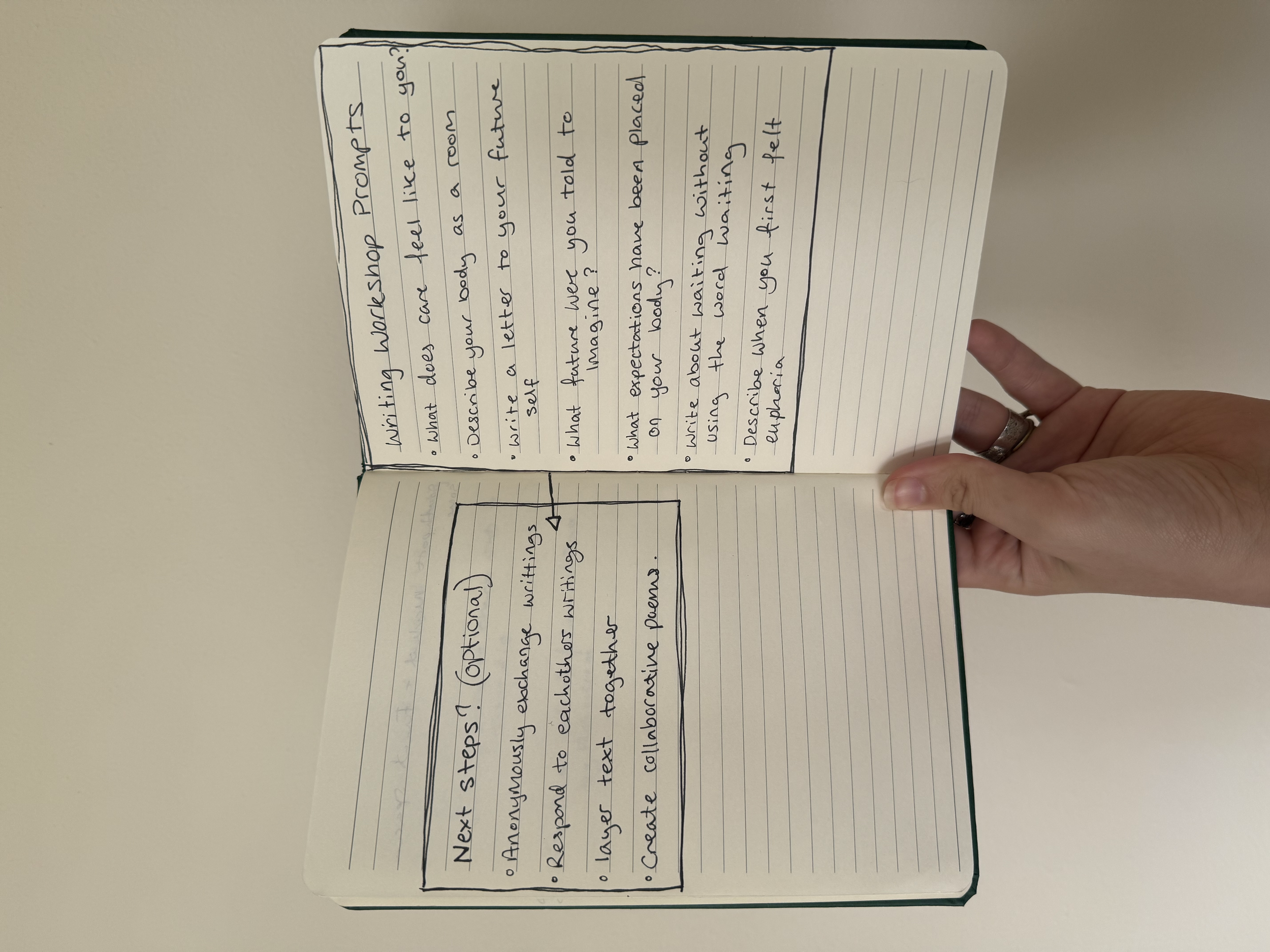
Collaborative writing exercises also form an important aspect of the workshop structure. These sessions encourage participants to respond to prompts surrounding care, future identity, bodily autonomy, family, waiting, medical systems, and imagined futures. Writing may take the form of poetry, fragmented reflections, anonymous statements, letters, or short-form responses. The flexibility of these exercises allows participants to engage with the subject matter at varying levels of emotional disclosure and personal comfort.
The project also explores how sound and spoken word may function within collaborative practice. Workshop planning includes the possibility of participants contributing recorded conversations, readings, environmental sounds, or spoken reflections that may later form part of the exhibition environment. LaBelle (2015) describes sound as capable of constructing relational and social spaces through listening and embodied experience. This approach allows sound to operate not only as atmosphere but also as collective testimony and documentation. Importantly, participation within these elements would remain entirely optional and participant led. This workshop specifically could be done off-site in the likes of Sefton Park where we could explore the idea of therapeutic sound-walks collecting field recordings and exploring spoken word and possible performance art elements. This style of session would be up to the attendees to decide how the session is shaped.
Alongside workshop activities themselves, the project has involved substantial consideration of ethics, accessibility, and participant wellbeing. Due to the emotionally sensitive nature of the themes being explored, workshop environments must prioritise care, consent, flexibility, and participant control. Current planning includes the use of optional anonymity, consent agreements, content warnings where necessary, and flexible participation structures that allow contributors to engage in way that feel safe and appropriate to them.
Accessibility is a major consideration within the workshop structure and eventual exhibition outcome. Planned accessibility measures include:
- Providing coloured written prompts alongside verbal discussion
- Offering multiple methods of participation
- Incorporating quite reflective activities
- Ensuring that outcomes are not reliant upon a single sensory mode of engagement
- Ensuring that venues for activity are wheelchair accessible and have separate quiet spaces if necessary
This approach is particularly important given the projects engagement with emotional vulnerability, bodily experience, and neurodiverse forms of communication.
The workshops themselves are intended not only as ways of culminating work towards a final exhibition, but as meaningful outcomes and social spaces in their own right. The emphasis of the project is therefore placed as much on process, conversation, and collective reflection as on the eventual exhibition outcome. Documentation from these sessions, including mind maps, zines, writings, recorded discussion, workshop set-ups, and participant-generated materials, will form a significant component of the project evidence and exhibition development.
The resulting exhibition is envisioned as a collectively informed space incorporating workshop outputs, independently submitted artworks, written material, publications, documentation, sound, and audience interaction. Rather than presenting a singular curatorial narrative surrounding trans fertility, the exhibition aims to reflect the emotional complexity, contradiction, and multiplicity of experiences shared throughout the workshop process. However, despite the exhibition being curated solely, the final outcome exhibited may differ from the intended vision as the show is to be shaped collectively by those involved.
Images included within this section document early workshop planning, zine prototypes, writing experiments, and proposed workshop layouts. These materials demonstrate the evolving transdisciplinary methodology underpinning the project and evidence the role of collaboration, discussion, and participant contribution that will drive its development.
Please also read further about how this project is made up in the websites blog.